

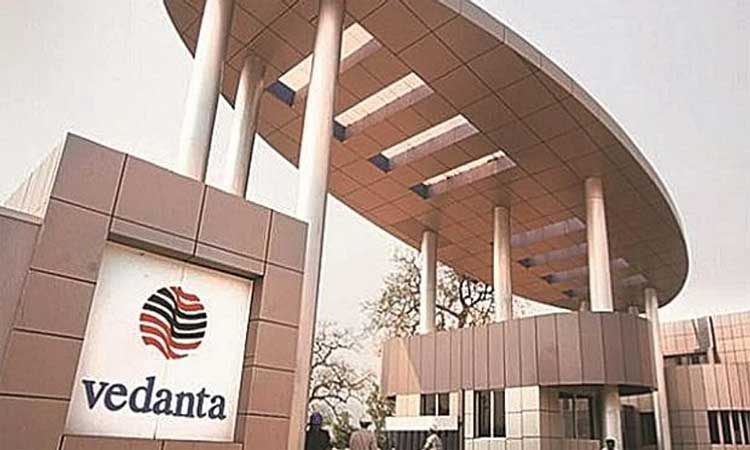
Forest clearance stalls Vedanta project
- Source Samvidhan News
- Sep 08, 2025
- Share:
Vedanta Limited’s ambitious 9 MTPA Sijimali bauxite mining project has hit delays, with the Union Environment Ministry deferring a decision on its proposal to divert more than 700 hectares of forest land in Odisha’s Rayagada and Kalahandi districts due to concerns over community consent and ecological impact. Anil Agarwal’s London-headquartered company was declared the preferred bidder for the block, estimated to hold 311 million tonnes of reserves, during an auction in March 2023. Vedanta plans to mine nine million tonnes of bauxite annually for 31 years to partly meet the raw material demand of its six MTPA alumina refinery at Lanjigarh. Accordingly, it sought clearance from the Union government in April 2025 for diversion of 564.58 hectares in the Rayagada forest division and 143.62 hectares in the Kalahandi (South) division, from a total leasehold area of 1,548.78 hectares. The project involves displacement of about 100 families from Malipadar in Rayagada and Tijamali in Kalahandi.
The Forest Advisory Committee (FAC), in its August 25 meeting, noted that Odisha had submitted reports from district collectors certifying due procedure in obtaining Gram Sabha resolutions under the Forest Rights Act (FRA). However, it observed that these reports failed to address concerns raised by villagers and petitioners before the Orissa High Court. Under the FRA, 2006, prior consent of local communities reliant on forests for their livelihoods is mandatory through Gram Sabhas. Locals allege that resolutions indicating their consent were “fraudulently” obtained in meetings reportedly held on December 8, 2023, while subsequent Gram Sabhas in 2024 opposed forest diversion. On March 5, 2025, a division bench of the High Court directed the Union government to consider local communities’ forest rights before approving Vedanta’s proposal, stressing that their consent must be genuinely secured.
The FAC also raised ecological concerns over mining in tropical dry deciduous forests dominated by sal trees, which serve as an elephant habitat. It instructed the state to consult Project Elephant and noted the area’s vulnerability to soil erosion from steep slopes, vegetation loss, and blasting, while directing Odisha to submit a comprehensive mitigation plan. Regarding compensatory afforestation, the state proposed 724 hectares of non-forest land in Rayagada and Kalahandi against 708 hectares sought for diversion. However, as 8.08 hectares of this overlapped with another mining project in Dubna-Sakradihi, the committee sought clarification. It further observed that many proposed sites showed signs of shifting cultivation and village paths, requiring site-specific verification to ensure they were free of encroachment.
Vedanta has asserted that mining will be confined largely to sparsely vegetated hilltops, with valleys preserved and developed as green belts. The company also committed to funding a wildlife conservation plan worth ₹34.44 crore for the 10-km impact zone and compensatory afforestation exceeding ₹107 crore. Yet, the FAC emphasised that Odisha must first address High Court directives, ecological safeguards, afforestation overlaps, and local community concerns before the proposal can move forward. Spread across 1,548.79 hectares covering 18 villages in Thuamul Rampur (Kalahandi) and Kashipur (Rayagada), the project has sparked protests from tribal communities who fear loss of forests, water sources, and traditional livelihoods.

Top Stories


Stay in Touch

Subscribe to our Newsletter