

International Conference ICPEP-7 to Bring Global Environmental Leaders Together at CSIR-NBRI, Lucknow
- Source Samvidhan News
- Nov 29, 2025
- Share:
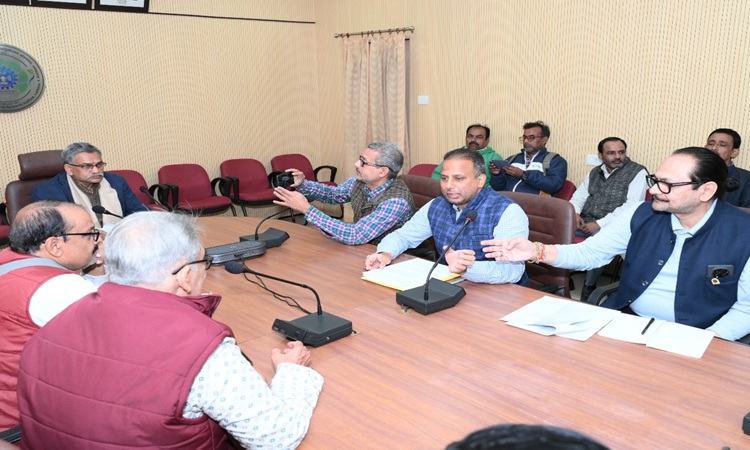
The 7th International Conference on Plants and Environmental Pollution (ICPEP-7), jointly organized by the International Society of Environmental Botanists (ISEB) and the CSIR–National Botanical Research Institute (CSIR-NBRI), will be held from 30 November to 2 December 2025 at CSIR-NBRI, Lucknow. Centered on the theme “Plants & Ecosystems for Advancing LiFE (Lifestyle for Environment), Green Growth, and Sustainable Future),” the conference will convene leading scientists, policymakers, environmental professionals, and students to discuss urgent global environmental challenges and innovative plant-based solutions.
Dr. AK Shasany, Director, CSIR-NBRI, announced that ICPEP-7 has received an overwhelming response, with a large number of scientific abstracts submitted from across India and abroad. More than 300 participants are expected, including nearly 250 delegates from India and 30 international participants representing Bangladesh, Finland, Japan, Mexico, Portugal, Spain, Russia, Sweden, the UK, and the USA. The strong international presence underscores the global importance of environmental research and collaborative action.
A major highlight of ICPEP-7 is the participation of prominent international scientific organizations, including the International Union of Biological Sciences (IUBS), represented by members of its International Advisory Committee such as Dr. Nathalie Fomproix (France). Their presence reinforces the conference’s commitment to advancing global scientific cooperation.
ICPEP-7 will feature keynote lectures, oral and poster presentations, panel and plenary discussions, and interactive networking sessions, covering wide-ranging thematic areas such as biodiversity conservation, climate change mitigation, plant–pollution interactions, environmental microbiology, geospatial technologies, green infrastructure, sustainability strategies, bioeconomy, ethnobotany, and emerging contaminants including microplastics. These sessions aim to spark new collaborations and promote science-driven solutions for planetary health and sustainable development.
Several leading international experts will deliver keynote talks addressing cutting-edge environmental challenges. Prof. Elina Oksanen (University of Eastern Finland, Finland) will discuss the escalating ecological risks posed by invasive species and demonstrate how advanced technologies like remote sensing and AI-based ecological analytics enable early detection and management. Prof. Swadhin Behera (JAMSTEC, Japan) will present the concept of AI-enabled Digital Twins, showcasing their potential to simulate climate and ecological scenarios, improve prediction of extreme events such as droughts and heat waves, and strengthen monitoring of coastal ecosystems and blue carbon resilience. Prof. Viney P. Aneja (North Carolina State University, USA) will highlight the environmental impacts of reactive nitrogen emissions from modern agriculture and their long-term implications for soil, water, and air quality. Prof. P.V. Vara Prasad (Kansas State University, USA) will address climate-driven stress on natural resources and global food systems, emphasizing Sustainable Agricultural Intensification (SAI) as a critical pathway for increasing food production through climate-smart, resource-efficient practices.
ICPEP-7 arrives at a pivotal moment as climate change, pollution, and ecological degradation redefine environmental priorities worldwide. The conference aims not only to diagnose these challenges but also to accelerate scientific dialogue, foster international collaborations, and shape strategies for a resilient, sustainable future grounded in plant science and ecosystem-based approaches.
The International Society of Environmental Botanists (ISEB), founded at CSIR-NBRI, is a globally recognized platform advancing research and policy dialogue on the environmental role of plants. It has successfully conducted six previous ICPEP conferences attended by leading scientists from around the world. The CSIR–National Botanical Research Institute (NBRI) is India’s premier institute dedicated to plant sciences, biodiversity conservation, pollution biology, climate change research, phytoremediation, and sustainable technologies. Together, the two organizations continue to drive global scientific efforts toward environmental protection and green development.

Top Stories

Stay in Touch

Subscribe to our Newsletter