

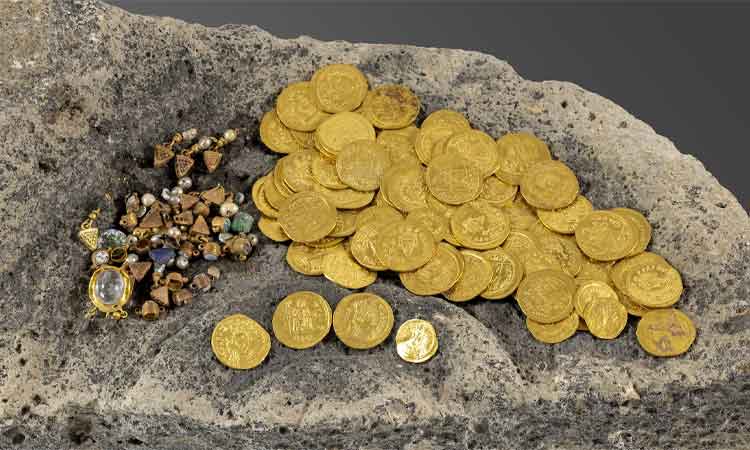
103 Ancient Gold Coins Unearthed from Historic Shiva Temple in Tamil Nadu
- Source Samvidhan News
- Nov 05, 2025
- Share:
A total of 103 ancient gold coins have been discovered from a centuries-old Shiva temple near the Javvadu Hills in Tiruvannamalai district of Tamil Nadu. This rare discovery took place at the historic Shiva temple in Kovilur village.
During renovation work in the temple’s sanctum sanctorum, workers unearthed a clay pot buried beneath the floor. When opened, the pot revealed a fascinating collection of beautifully arranged and remarkably well-preserved gold coins.
According to police officials, the temple is believed to date back several centuries to the reign of the Chola king Rajaraja Cholan III. The hidden pot was found during the renovation of the sanctum, and local authorities were immediately informed.
Officials from the Revenue Department and the Hindu Religious and Charitable Endowments Department promptly arrived at the site, seized the coins, and ensured their safe preservation.
Experts noted that the temple’s architectural features bear the distinctive hallmarks of the late Chola period, supporting the view that it was built during the 13th century under the rule of Rajaraja Cholan III.
Historians believe the coins could belong to the later Chola or early Pandya period—a time when gold coins were widely used in temple donations and trade networks across South India.
The Department of Human Resource and Cultural Heritage is coordinating with archaeologists and numismatists to study the inscriptions, minting techniques, and metallic composition of the coins to determine their origin and historical significance.
This remarkable discovery has generated great excitement among local residents and heritage enthusiasts, who regard it as a powerful reminder of Tamil Nadu’s rich temple heritage and the enduring legacy of the Chola civilization.

Top Stories



Stay in Touch

Subscribe to our Newsletter