

CSIR-AMPRI launches indigenous SODAR system to strengthen India’s weather forecasting
- Source Samvidhan News
- Oct 04, 2025
- Share:
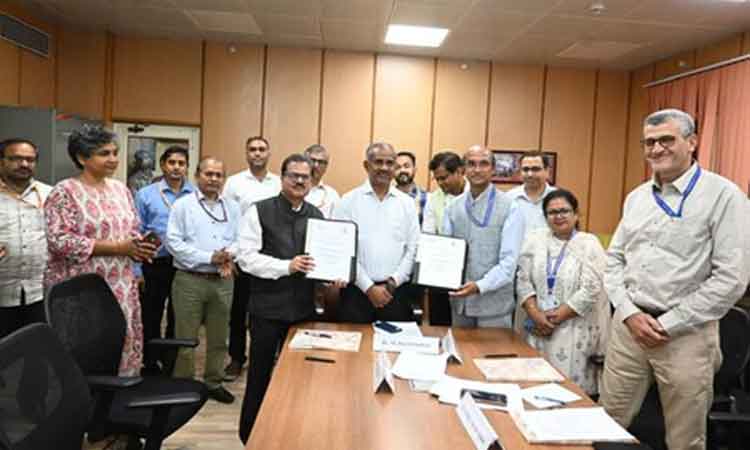
The Council of Scientific and Industrial Research–Advanced Materials and Processes Research Institute (CSIR-AMPRI), Bhopal, has successfully developed and inaugurated an indigenous Sound Detection and Ranging (SODAR) system, marking a significant step forward in India’s meteorological and climate research capabilities. The facility was launched at the India Meteorological Department (IMD), New Delhi, in the presence of senior dignitaries and scientists on CSIR’s Foundation Day.
SODAR, an advanced acoustic remote sensing technology, provides real-time data on wind profiles, turbulence, and atmospheric boundary layer dynamics by transmitting acoustic signals into the atmosphere. The facility will enhance short-range weather forecasting, improve climate models, and strengthen disaster risk management strategies in the country.
On the occasion, a Memorandum of Understanding (MoU) was signed between CSIR-AMPRI and IMD to foster collaboration in climate and weather research, data sharing, model validation, and environmental monitoring. The partnership aims to integrate SODAR-based insights into India’s forecasting systems, thereby improving the accuracy of predictions and building resilience against extreme weather events.
Dr. M. Ravichandran, Secretary, Ministry of Earth Sciences, highlighted the importance of indigenous solutions in advancing India’s climate preparedness. Dr. Mrutyunjay Mohapatra, Director General of Meteorology, IMD, emphasized that SODAR will provide vital supplementary data for localized forecasting. Dr. N. Kalaiselvi, Director General of CSIR, praised the initiative as a milestone in self-reliance under the “Atmanirbhar Bharat” mission.
Prof. Thallada Bhaskar, Director, CSIR-AMPRI, underscored the institute’s commitment to technological innovation, while Dr. Kirti Soni, Principal Investigator of the project, outlined the scientific potential of deploying a network of such systems across diverse Indian regions.
With the successful commissioning of this facility, India takes a decisive step toward strengthening its atmospheric monitoring infrastructure. The SODAR initiative holds promise for applications in agriculture, environmental studies, urban planning, and disaster risk reduction. Future plans include scaling up deployment across strategic locations nationwide.

Top Stories

Stay in Touch

Subscribe to our Newsletter