

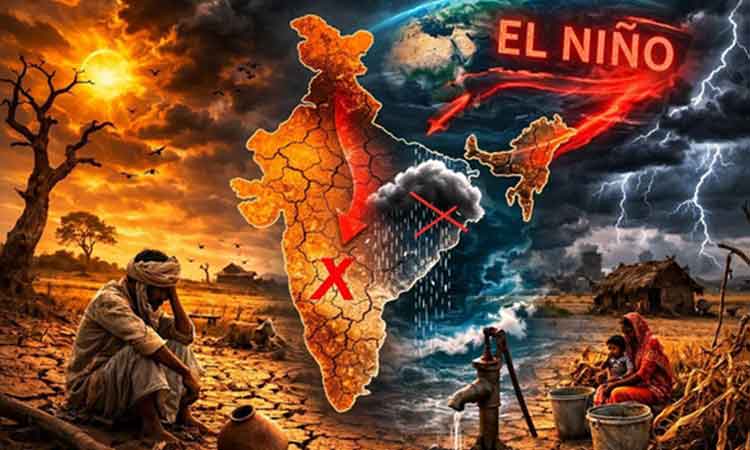
Growing Concern Over Possible “Super El Niño” and Its Potential Impact on India
- Source Samvidhan News
- May 24, 2026
- Share:
Climate scientists and meteorological agencies across the world have expressed growing concern over the possible emergence of a “Super El Niño” event during 2026, warning that the phenomenon may significantly impact global weather patterns, including India’s monsoon, agriculture, water resources, and temperature conditions.
According to climate experts, sea surface temperatures in the central and eastern Pacific Ocean have shown rapid warming in recent months, increasing the likelihood of a strong El Niño event. Scientists state that if the warming intensifies further, the phenomenon could develop into a “Super El Niño,” similar to the major climate events recorded during 1997-98 and 2015-16. Such events are known to trigger widespread weather disruptions across several regions of the world.
Experts explain that El Niño is a natural climate pattern caused by abnormal warming of ocean waters in the Pacific Ocean. However, during a Super El Niño, the warming becomes exceptionally strong, influencing atmospheric circulation and affecting rainfall and temperature patterns worldwide. Scientists have also indicated that climate change may be contributing to stronger and more frequent extreme weather events globally.
India remains particularly vulnerable to El Niño conditions because of its close connection with the southwest monsoon season. Weather specialists have warned that a strong El Niño could weaken monsoon rainfall, potentially resulting in below-normal precipitation across several parts of the country. Reduced rainfall may impact agricultural production, especially kharif crops such as rice, pulses, sugarcane, and oilseeds.
In addition to monsoon concerns, experts have cautioned that India could witness prolonged and severe heatwave conditions during the summer months. Several states have already experienced unusually high temperatures this year, increasing pressure on water resources, electricity demand, and public health systems. Agricultural economists have also warned that lower crop yields may contribute to rising food prices and inflationary pressure in the coming months.
Climate agencies worldwide are closely monitoring developments in the Pacific Ocean. Scientists have noted that while El Niño generally affects the Indian monsoon negatively, other climatic factors such as the Indian Ocean Dipole (IOD) could influence the final rainfall pattern. Updated forecasts are expected in the coming weeks as weather models continue to assess evolving conditions.
Authorities and disaster management agencies are expected to strengthen preparedness measures, including heatwave advisories, water conservation planning, agricultural guidance, and emergency response systems to minimize the possible impact of extreme weather conditions.
Experts have emphasized the importance of early preparedness, climate resilience, and coordinated action to address the potential challenges arising from a possible Super El Niño event in 2026.

Top Stories




Stay in Touch

Subscribe to our Newsletter