

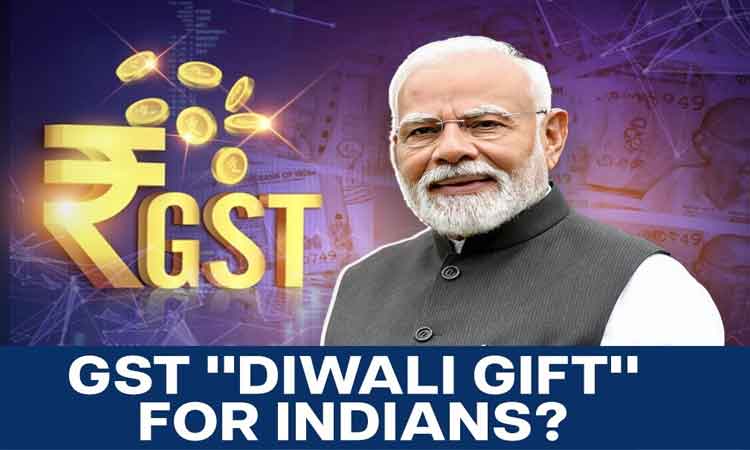
Historic GST Reform this Diwali, Essential Items to Become Cheaper
- Source Samvidhan News
- Sep 04, 2025
- Share:
The Government of India has announced a historic Diwali gift for the nation with the launch of the Next-Gen GST Reform, aimed at reducing the tax burden on citizens, uplifting farmers, and boosting businesses while strengthening the vision of Aatmanirbhar Bharat. The reform introduces significant tax cuts across essential goods, agriculture, healthcare, education, automobiles, and electronic appliances, making everyday living more affordable for households and enterprises.
Under the new GST structure, daily essentials such as hair oil, shampoo, toothpaste, soaps, shaving cream, toothbrushes, butter, ghee, cheese, dairy spreads, packaged namkeens, utensils, feeding bottles, and sewing machines will now attract a reduced GST of only 5%, compared to earlier rates of 12%–18%. Farmers and the agriculture sector will also benefit greatly, with GST on tractors, tractor tyres, bio-pesticides, micro-nutrients, drip irrigation systems, sprinklers, and agricultural machinery reduced from 12%–18% to just 5%.
Healthcare has been made more accessible with GST on individual health and life insurance, diagnostic kits, thermometers, medical-grade oxygen, corrective spectacles, and glucometers brought down, with many items now either at 5% or completely exempt. Education materials such as maps, charts, globes, pencils, crayons, sharpeners, exercise books, and erasers have been made GST-free, making learning tools more affordable for students across the country.
Automobiles have also become more affordable with reduced GST on petrol, LPG, CNG cars (up to 1200cc and 4000mm), diesel hybrid cars, motorcycles, three-wheelers, and vehicles used for goods transport, with tax rates cut from 28% to 18%. Similarly, electronic appliances such as air conditioners, televisions (above 32 inches), monitors, projectors, and dishwashing machines will now attract a lower GST of 18% instead of 28%.
Apart from rate reductions, the government has also introduced key process reforms to simplify compliance. Automatic GST registration will now be completed within three working days based on data analysis, while provisional refunds will be sanctioned through system-based evaluations. Zero-rated supplies and items under inverted duty structure will also be covered under simplified refund procedures, reducing compliance burdens for businesses, especially MSMEs.
Prime Minister Narendra Modi described the reform as a transformative step, stating, “The next generation of GST reforms are a gift for every Indian this Diwali. Taxes for the general public will be reduced substantially. Our MSMEs and small entrepreneurs will get huge benefit. Everyday items will become cheaper and this will also give a new boost to the economy.”
With this landmark reform, the Government of India has not only reduced the cost of living for common citizens but also created a more transparent, business-friendly tax system, reaffirming its commitment to building a stronger and self-reliant economy.

Top Stories

Stay in Touch

Subscribe to our Newsletter