

Odisha Showcases Semiconductor Ambitions at SEMICON India 2025
- Source Samvidhan News
- Sep 04, 2025
- Share:
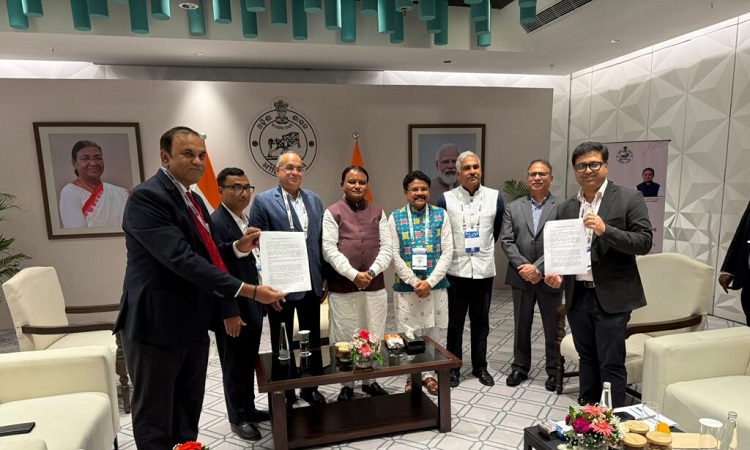
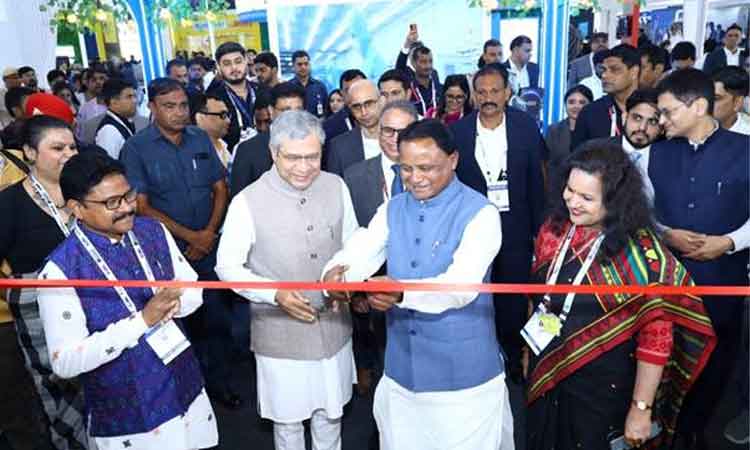
Odisha is set to emerge as the next big destination for semiconductor and electronics innovation, Chief Minister Mohan Charan Majhi announced while inaugurating the Odisha Pavilion at SEMICON India 2025 in New Delhi. The pavilion showcased the state’s expanding semiconductor ecosystem, supported by progressive policies, modern infrastructure, and a skilled talent pool. The Chief Minister’s remarks came on a landmark occasion as Prime Minister Narendra Modi launched the country’s first indigenous chip, a milestone that Majhi described as “truly inspiring” in a social media post.
Congratulating PMEC Berhampur for developing a high-performance multiplier IC and NIT Rourkela for its contributions to the Made in India chip initiative with the VG amplifier, sensor circuit, and encryption core, Majhi said these achievements reflect the innovation nurtured within Odisha’s institutions and the state’s growing role in India’s semiconductor journey. He added that Odisha’s bold policies and investment-ready infrastructure are positioning it as a future hub for electronics manufacturing. Supporting this vision, state IT minister Mukesh Mahaling emphasized that Odisha is advancing towards becoming a global hub for semiconductor and electronics innovation, backed by forward-looking policies and strong investment potential.
As part of its Vision 2036 and 2047, the state government has announced plans to expand the World Skill Centre in Bhubaneswar and establish three new campuses focused on IT/ITeS, semiconductors, aerospace, and marine engineering. These skilling hubs will provide courses in high-demand fields such as avionics, digital animation, logistics, and chip design, thereby reinforcing Odisha’s ambition to become a national hub for electronics system design and manufacturing. Dedicated ESDM and semiconductor clusters are also being developed in Khurda and Ganjam districts, supported by design-oriented startups, research institutions, and specialized training programs.
In August, the Odisha Cabinet sanctioned the Electronics Component Manufacturing Policy 2025, which offers 25 percent capital subsidy for the first ten large-scale projects and 10 percent for subsequent projects, in addition to central incentives. The policy also provides land allocation, rental support, exemptions from electricity duties for a decade, and reimbursements on power tariffs. Adding to the state’s momentum, the Union Cabinet has approved two major semiconductor manufacturing initiatives for Odisha under the India Semiconductor Mission with a total investment of ₹4,009 crore. These projects, to be established in Bhubaneswar’s Info Valley, will feature India’s first commercial compound semiconductor fabrication facility, which will manufacture silicon carbide devices essential for defense systems, missiles, and electric vehicles.
With strong institutional contributions, progressive policies, and national-level support, Odisha is positioning itself as a future-ready hub for semiconductor and electronics innovation, driving India’s self-reliance and global competitiveness in advanced technologies.

Top Stories


Stay in Touch

Subscribe to our Newsletter