

ICAR–IARI Regional Station, Karnal successfully organizes “Training and Seed Distribution Programme”
- Source Samvidhan News
- Oct 17, 2025
- Share:
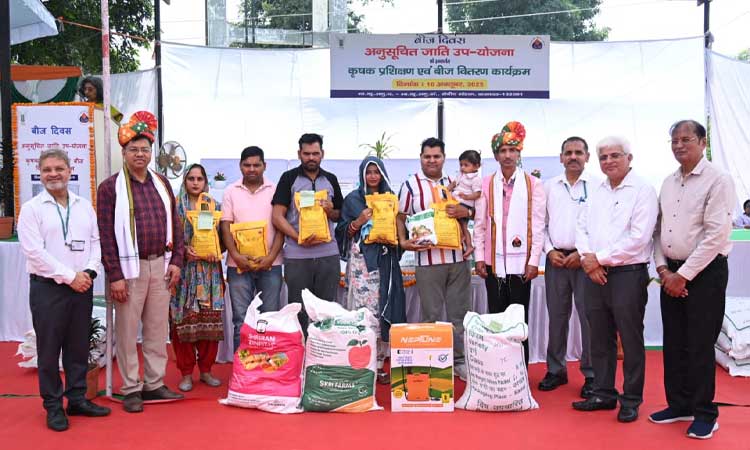
A “Training and Seed Distribution Programme” was successfully organized today at the ICAR–Indian Agricultural Research Institute (IARI), Regional Station, Karnal (Haryana) under the Scheduled Caste Sub Plan (SCSP) implemented by the ICAR – Indian Agricultural Research Institute (IARI), New Delhi. The programme aimed to empower farmers, particularly those belonging to the Scheduled Caste community, by providing them with access to advanced agricultural technologies, quality seeds, nutrient management practices, and scientific methods to enhance their self-reliance and move toward profitable and sustainable farming.
The Chief Guest, Dr. R. N. Padaria, Joint Director (Extension), IARI, New Delhi, delivered an inspiring address emphasizing that “The primary goal of the Scheduled Caste Sub Plan is not merely to impart training, but to develop scientific temper among farmers and make them technologically empowered. Real agricultural transformation will happen only when farmers themselves become innovators and adopt science-based solutions.” He also highlighted the importance of soil testing, micronutrient management, organic and integrated nutrient management, water conservation practices, and residue management in improving farm productivity and environmental health.
Special Guest, Mr. Vijay Setia, Former President, All India Rice Exporters Association, in his address said, “To make Indian agriculture competitive and sustainable, we must focus on quality seeds, scientific crop management, and diversification. By adopting innovation and modern marketing practices, farmers can significantly enhance their income.” He also stressed the need for climate-resilient and sustainable farming in view of the emerging challenges of climate change.
Dr. Sandeep Kumar Lal, Nodal Officer (SCSP), briefed the participants about the objectives, structure, and progress of the programme. He informed that IARI’s scientific teams are continuously working to ensure the reach of technological innovations and high-quality inputs to farmers belonging to socially disadvantaged groups. Dr. Shiv Kumar Yadav, Head, IARI Regional Station, Karnal, motivated farmers by stating that “Seed production is not merely a technical activity but a profitable enterprise that can transform farmers into agri-entrepreneurs.” He encouraged the participants to actively take part in training programmes and act as ambassadors of scientific farming practices in their villages. Dr. Sandeep Sihag emphasized the need to adopt environment-friendly and climate-smart agricultural practices suitable to changing environmental conditions. He said, “Instead of burning crop residues, farmers can use them as an energy source, organic manure, or livestock feed. This not only provides an additional source of income but also reduces pollution.”
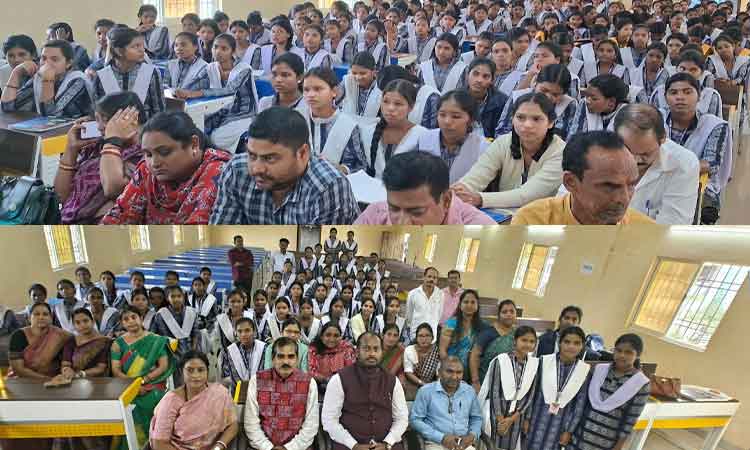
The programme witnessed enthusiastic participation from around 500 farmers (men and women). Participants were provided with selected input materials including improved varieties of wheat and mustard seeds, vermicompost, zinc sulfate, vegetable seed kits, and agricultural tools such as spray pumps. Farmers expressed that such programmes offer them valuable technical knowledge, practical experience, and motivation toward self-reliant farming.
During the event, Dr. Ashwani Kumar, Principal Scientist, along with outstanding technical, administrative, young professionals, MTS, and contractual staff, were felicitated with certificates and mementos for their exceptional contributions. The felicitation ceremony reflected the institute’s culture of recognizing excellence and dedication. The event was coordinated by Dr. Sangeeta Yadav, Principal Scientist, IARI, Karnal, who ensured its smooth conduct. The vote of thanks was proposed by Dr. Rakesh Seth, Principal Scientist, who emphasized that such programmes serve as a strong bridge between farmers and scientists, essential for the holistic development of Indian agriculture. The programme was attended by several senior scientists including Dr. Renu Singh, Dr. Ruchi Bansal, Dr. Shashank P. R., Dr. Chandramani Waghmare (IARI, New Delhi) and Dr. Ravinder Kumar (ICAR–Indian Institute of Wheat and Barley Research, Karnal).

Top Stories
Stay in Touch

Subscribe to our Newsletter