

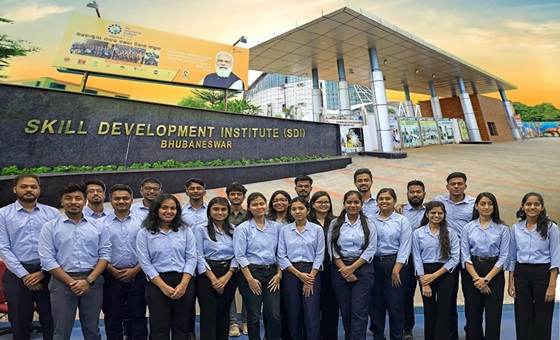
Skill Development Strong in Odisha, but Employment and Women’s Participation Remain Concerning
- Source Samvidhan News
- Aug 05, 2025
- Share:
Odisha's labour force participation rate stands at an impressive 61.3%, notably higher than the national average, reflecting a robust and engaged working-age population. Around 65% of the state's residents fall in the productive age group of 15 to 59 years, providing a significant demographic advantage. However, challenges remain—particularly in the inclusion of women in the formal workforce. Despite the high overall participation, only 16% of women in the state are employed in the formal sector, far below the national average of 23.8%. In rural areas, female participation is around 39.5%, and even lower in urban regions at 34%.
The Odisha government has made heavy investments in building a strong technical and vocational education ecosystem. The state boasts more than 950 Industrial Training Institutes (ITIs), nearly 200 engineering colleges, and several dedicated skill universities. These institutions produce over 1.7 lakh graduates annually across various disciplines, creating a steady pipeline of educated youth. Yet, despite this strong infrastructure, job placements remain a concern. Over the last decade, only about 15,000 out of 34,000 engineering graduates from government institutions have been employed, leaving nearly 19,000 without jobs. Similarly, among diploma holders, only around 20,000 out of 54,000 have found employment.
To bridge the gap between education and employability, the state has launched several new initiatives. A National Skill Training Institute (NSTI) is being set up in Bhubaneswar as part of a central government scheme aimed at upgrading ITIs and establishing National Centres of Excellence. The NSTI is expected to train over 20 lakh youths over the next five years. Additionally, the NSDC International Academy in Bhubaneswar, spread across 47 acres, focuses on soft skills, foreign languages, and job-ready training through “Skill on Wheels” mobile units.
Despite these efforts, industry experts point to a skills mismatch as a major barrier to employment. Many graduates possess degrees but lack practical, industry-relevant capabilities. This gap results in underutilized capacities in vocational centres, especially among more educated youth who often seek private or government jobs instead of vocational routes.
Nevertheless, progress is being made. Odisha's overall unemployment rate among those aged 15 and above dropped from 3.9% in 2022–23 to 3.1% in 2023–24. Youth unemployment also fell from 13.8% to 11.1% over the same period. Skill development programs under PMKVY (Pradhan Mantri Kaushal Vikas Yojana) and Jan Shikshan Sansthan continue to serve thousands across the state, with over ₹40 crore invested in the last three years alone.
In summary, while Odisha has built an impressive framework for skill development and workforce training, the next big challenge lies in improving the employability of graduates and enhancing women’s participation in formal employment. Continued reforms and public-private partnerships will be key to converting this demographic strength into sustainable economic growth.

Top Stories
Stay in Touch

Subscribe to our Newsletter