

25th SCO Summit in Tianjin Reinforces India’s Strategic Autonomy and Regional Cooperation
- Source Samvidhan News
- Sep 05, 2025
- Share:
The 25th Shanghai Cooperation Organisation (SCO) Summit, held in Tianjin, concluded with a strong message of unity among member states and a reaffirmation of the Global South’s growing role in shaping a multipolar world order.
Established in 2002 by China, Russia, and Central Asian republics, the SCO has evolved into a major forum for regional cooperation on security, trade, and culture. Against the backdrop of former U.S. President Donald Trump’s tariff measures and growing global divides, the summit highlighted the collective resolve of Eurasian nations to resist unilateralism.
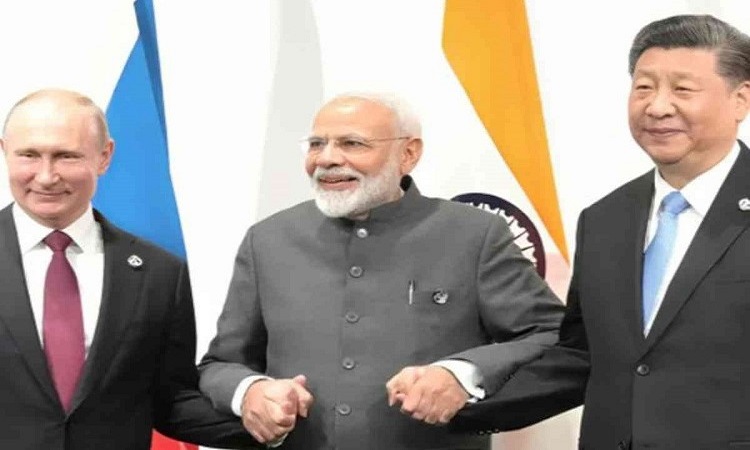
One of the most significant outcomes was the meeting between Indian Prime Minister Narendra Modi and Chinese President Xi Jinping. The two leaders discussed steps to normalise relations, including the resumption of direct flights, easing of visa restrictions, and revival of Indian pilgrimages to Kailash Mansarovar. Both sides acknowledged that cooperation between India and China is essential for regional stability, while agreeing to continue efforts for a peaceful resolution of border issues.
Prime Minister Modi emphasised India’s policy of strategic autonomy, reiterating that relations must be based on mutual respect, benefit, and sensitivity. He also underlined concerns about India’s $120 billion trade deficit with China and stressed that connectivity projects must respect sovereignty — an indirect reference to the China–Pakistan Economic Corridor.
The summit’s joint declaration strongly condemned the April 22 terrorist attack in Pahalgam, Kashmir, extended condolences to victims’ families, and called for justice. It also reaffirmed a united stand against terrorism, separatism, and extremism. The declaration further condemned Israeli and U.S. strikes on Iran and urged an immediate ceasefire in Gaza.
Looking forward, the SCO unveiled a ten-year development strategy focusing on strengthening multipolarity. Proposals included the creation of joint financial instruments to bypass Western-dominated systems, a new Development Bank for infrastructure funding, and reforms in global governance. The declaration also endorsed enhanced cultural exchanges, trade facilitation agreements, and capacity-building measures.
For India, the summit was an opportunity to assert independence in global affairs, resist external pressure, and strengthen ties with both Russia and China. The meeting between Prime Minister Modi and Russian President Vladimir Putin reaffirmed the “special and privileged strategic partnership” between the two countries.
The Tianjin summit underscored India’s pivotal role in the Eurasian framework and highlighted its ability to balance relations — improving ties with the U.S. while carefully resetting relations with China.

Top Stories

Stay in Touch

Subscribe to our Newsletter