

ICMR-RMRC Bhubaneswar Hosts Workshop on Prioritisation of Climate-Sensitive Zoonotic and Enzootic Diseases in Odisha
- Source Samvidhan News
- Oct 21, 2025
- Share:
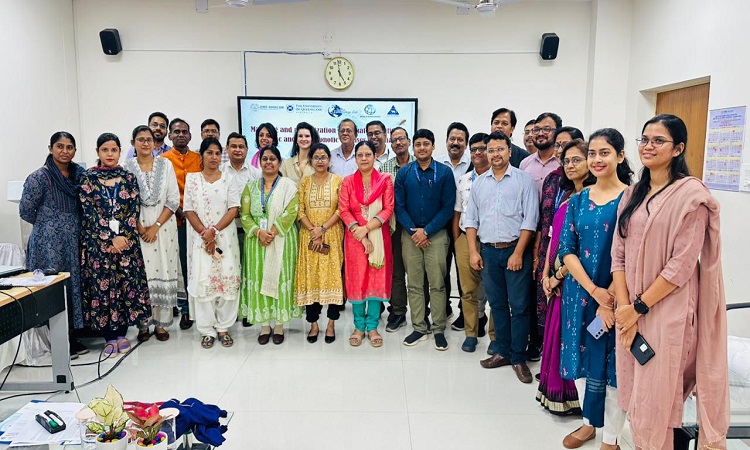
The ICMR–Regional Medical Research Centre, Bhubaneswar (ICMR-RMRCBB), in collaboration with the University of Queensland, Australia, and ICAR–NIVEDI, with support from the World Bank, successfully organised a two-day “Prioritisation Workshop of Climate-Sensitive Zoonotic and Enzootic Infectious Diseases in Odisha” on October 17–18, 2025.
The workshop aimed to systematically identify and prioritise zoonotic and enzootic diseases influenced by climate change through an evidence-based approach aligned with the One Health framework. Around 30 participants from human, animal, and environmental health sectors took part in the deliberations.
Joining the inaugural session virtually, Dr. Mukesh Mahaling, Hon’ble Minister of Health & Family Welfare, Government of Odisha, lauded ICMR-RMRC Bhubaneswar’s collaborative efforts in addressing the growing threat of zoonotic diseases. He highlighted that changing climatic conditions are altering disease transmission patterns, making the One Health approach essential to safeguard both human and animal health.
Dr. Mahaling further shared that under the visionary leadership of Hon’ble Prime Minister Shri Narendra Modi and Hon’ble Chief Minister Shri Mohan Charan Majhi, the Government of Odisha is developing a State Action Plan on Zoonotic Diseases to strengthen preparedness, enhance cross-sectoral coordination, and ensure timely responses to emerging health threats.
Dr. Hikuepi (Epi) Katjiuongua, Senior Agricultural Economist, World Bank, underscored the importance of integrating climate resilience into public health and agricultural systems, stressing that sustainable solutions require strong institutional partnerships.
Addressing the participants, Dr. Bijaya Kumar Mohapatra, Secretary, Department of Health & Family Welfare, Government of Odisha, highlighted the longstanding partnership between the State Health Department and ICMR-RMRC Bhubaneswar. He noted that such collaborations are vital for translating scientific research into effective public health policies and enhancing readiness against emerging diseases.
In her remarks, Dr. Sanghamitra Pati, Director, ICMR-RMRC Bhubaneswar and Additional Director General, ICMR, emphasised that prioritising zoonotic diseases is central to India’s health security and environmental sustainability. She reaffirmed the importance of intersectoral collaboration under the One Health approach and commended the organising team led by Dr. Debdutta Bhattacharya for successfully conducting the workshop.
The two-day event featured technical sessions on disease prioritisation methods, indicator selection, ranking of climate hazards, and real-time scoring of climate-sensitive diseases. The outcomes will contribute to developing evidence-based strategies and policy recommendations aimed at strengthening climate-resilient health systems and integrated disease surveillance in Odisha.

Top Stories

Stay in Touch

Subscribe to our Newsletter